





When was the last time you really thought about how you’re building academic vocabulary in your classroom?
Not how you teach vocabulary or what activities you use, but how those particular words ended up in front of your students.
If you’re like a lot of ELA teachers, vocabulary is probably tied to whatever you’re reading. You’re working through a novel, and there are a handful of words students need to know. Or maybe your district curriculum includes a vocabulary activity with each reading selection. The words are already chosen, the activity is ready to go, and you can check vocabulary off your lesson plan.
And I get it. With everything we’re expected to teach, having something already prepared is one less decision to make.
But are we doing enough to help students build the kind of vocabulary they’ll need beyond the story or article we’re teaching?
Because building academic vocabulary is about more than understanding the words in the current reading assignment.
Are We Teaching Vocabulary or Just the Words in Our Reading?
I want to be clear that I have nothing against teaching vocabulary from a novel or short story. If students need to understand certain words to make sense of what they’re reading, of course we should teach those words.
But here’s what I wonder.
When our curriculum provides a list of vocabulary words, do we ever stop to consider why those particular words were chosen?
Maybe they’re essential to understanding the story. Maybe they’re unfamiliar words that students aren’t likely to encounter again. Or maybe they’re academic words that students will see in other classes and reading selections.
Those are three different reasons for selecting vocabulary.
Consider the reading students are expected to do throughout their school day. They’re encountering informational articles in ELA, historical documents in social studies, and increasingly complex explanations in science. The vocabulary they need to understand isn’t limited to the words that appear in their current novel.
Yet it’s easy for our vocabulary instruction to become tied so closely to individual reading selections that we lose sight of the bigger goal.
We’re not just helping students understand one text. We’re trying to help them become readers who can approach unfamiliar texts with greater confidence and understanding.
And that requires us to think about vocabulary beyond the next reading assignment.
Building Academic Vocabulary Is Part of Building Stronger Readers
Here’s something I’ve noticed in conversations with some of my student teachers. We spend a lot of time discussing students who struggle with reading comprehension, and vocabulary often comes up as part of that conversation. Sometimes students can read (decode) every word in a passage, but they still can’t explain what they’ve read.
It’s tempting to immediately think about comprehension strategies. Maybe they need more practice identifying the main idea or making inferences. And sometimes they do. But what if part of the problem is that they simply don’t understand enough of the language in the passage?
Think about what happens when you’re reading something outside your own area of expertise. You might recognize most of the words, but if you’re unfamiliar with the terminology, understanding the information takes a lot more effort. Our students experience that, too. As they move through middle and high school, they’re expected to read texts that contain more sophisticated language and increasingly complex ideas. If their vocabulary knowledge isn’t growing alongside those expectations, reading becomes more difficult.
That’s why I don’t think we can treat vocabulary as something separate from reading comprehension. The two are connected. The more language students understand, the better equipped they are to make sense of what they’re reading. That doesn’t eliminate every reading challenge, but it gives them an important foundation to build on.
Does Vocabulary Have a Regular Place in Your Classroom?
I think this is where things can get a little uncomfortable, because most of us would agree that vocabulary matters. But agreeing that something is important and consistently making time for it are two different things.
And classroom time is always in short supply. We’ve got novels to finish, writing assignments to teach, standards to cover, and assessments to prepare for. Sometimes vocabulary instruction gets pushed aside because there are other things demanding our attention.
Or maybe we feel like we’re covering vocabulary because students are completing the activities included with our curriculum.
But are those activities helping students build their vocabulary over time, or are they simply helping students learn a few words for the current reading?
I think that’s a question worth asking.
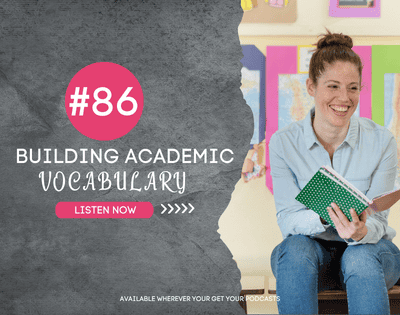
This is exactly what I’m talking about in this week’s episode of the Middle School Cafe podcast. I’m looking at how we can be more intentional about the vocabulary we’re teaching without going back to those old memorize-and-test vocabulary lists. We’ll talk about creating manageable routines, helping students revisit words they’ve already learned, and finding opportunities for students to actually use that vocabulary in their writing and classroom conversations.
Because the goal isn’t just for students to recognize a word on a vocabulary worksheet. We want them to understand it well enough to recognize and use it beyond that one lesson.
What Are We Really Hoping Students Learn?
I think it’s easy to get caught up in what students can demonstrate at the end of a vocabulary lesson. Can they define the words? Can they identify the correct meaning? Can they complete the activity successfully? Those things matter, but they’re not the ultimate goal. What I really want is for students to encounter a word in a new reading selection and recognize it. I want them to understand enough of the language that they can focus on the ideas in the text rather than getting stuck trying to figure out what everything means.
And yes, I’d love to see them become comfortable using some of those words in their own writing and conversations, too. But that kind of understanding takes more than introducing a word and checking it off our lesson plan.
It takes intentional instruction, consistent exposure, and time. We want students to develop vocabulary knowledge they can carry from one reading experience to another, rather than learning words for a particular assignment and then moving on.
Want to give this some more thought? Head back to the top of the blog and push play on this week’s episode!
Resources you may find helpful:
- Vocabulary Lessons 6th Grade
- Vocabulary Lessons 7th Grade
- Vocabulary Lessons 8th Grade
- Halloween related resources
Keep listening:
- Vocabulary Strategies For Middle School: Simple Ways To Make It Stick (Part 1)
- Vocabulary Strategies For Middle School: Simple Ways To Make It Stick (Part 2)
Further reading:
- Vocabulary Building Strategies for Meaningful Word Practice
- Vocabulary Instruction: The Key to Comprehension
Tune in on your favorite podcast apps Apple, Amazon, Spotify, and more! If you’re loving this podcast, please rate, review and follow!